
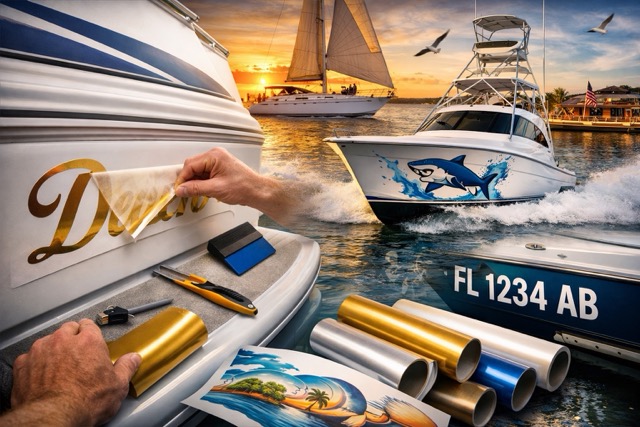
Introduction: Your Boat, Your Signature Statement
Your boat is more than just a collection of fiberglass and hardware; it’s a reflection of your passion, a vessel for adventure, and a statement on the water. How you present it, starting with its name, defines its character. In an industry with a significant economic footprint, where U.S. boat sales and services reached $57.7 billion in 2023, making your mark is essential. Vinyl boat lettering has emerged as the premier method for boat owners to craft this identity with precision, durability, and style.
More Than Just a Name: The Power of Personalization
The name on a boat’s hull is its soul, a tradition steeped in maritime history. But modern personalization goes beyond a simple name. It involves a thoughtful design process—choosing the right font, color, and graphics to convey a specific personality. Whether it’s a sleek, modern speedboat or a classic, sturdy fishing vessel, custom lettering transforms a factory model into a unique craft. This act of personalization is a final, crucial step in the boat owner’s journey, making the vessel truly their own.
Why This Guide is Essential for All Watercraft Owners
Navigating the world of boat lettering can be complex. From selecting the right materials to understanding legal requirements and mastering the application, every owner faces a learning curve. This guide is designed to be your definitive resource. It demystifies the process, providing clear, expert guidance on everything from design fundamentals to long-term maintenance. For every owner of any watercraft, this is your roadmap to mastering your message and ensuring your vessel stands out for all the right reasons.
Why Marine-Grade Vinyl is the Undisputed Champion for Watercraft
When selecting materials for your boat, prioritizing performance is essential. The harsh marine environment requires materials that can endure continuous exposure to the sun, salt, and water. Marine-grade vinyl excels in these conditions, proving its superiority by establishing itself as the premier choice for boat lettering and graphics.
Understanding Marine-Grade Vinyl: Engineered for the Elements
Marine-grade vinyl is not an ordinary sticker. This material performs well and is made for use in water environments. The best options are typically cast vinyl, which is more durable and conformable to curved hulls than its calendared counterpart. This material is infused with potent UV inhibitors and features a robust, waterproof adhesive. This construction ensures that your lettering resists fading, cracking, peeling, and discoloration, maintaining its crisp appearance season after season. The growing demand for such resilient materials is reflected in the vinyl fabrics market, which was valued at USD 3.5 billion in 2024 and continues to expand.
Vinyl’s Edge: A Comparative Look at Lettering Materials
Historically, boat names were hand-painted by skilled artists. This method looks nice but costs a lot and takes time. It can chip and fade easily. You need to fix it often. Vinyl lettering offers a modern, superior alternative. It provides the sharp, clean lines of professional paintwork at a fraction of the cost and with significantly greater longevity. Unlike paint, vinyl decals can be easily removed or replaced, offering flexibility for a name change or design update without needing to sand and refinish the hull.
The Unseen Benefits: ROI and Branding
High-quality vinyl lettering is an investment in your vessel’s value. A professionally lettered boat with a clear, well-maintained name and registration numbers presents better than one with peeling paint or faded decals. This attention to detail signals a well-cared-for vessel, which can positively impact its resale value. For commercial vessels, the benefits are even more pronounced. Custom vinyl graphics and logos transform the hull into a mobile billboard, providing powerful and cost-effective branding that builds recognition on the water and at the port.
Designing Your Message: Aesthetics, Impact, and Readability
The design of your boat lettering is where your vision truly comes to life. This process involves a delicate balance between showcasing your personal style and ensuring functional readability. You want your lettering to be an extension of your personality, yet it must also harmonize aesthetically with the lines and overall design of your vessel. A well-thought-out design not only draws attention and admiration up close but also ensures clarity and impact when viewed from a distance. This means considering factors like font choice, size, color contrast, and spacing to create a look that’s both striking and readable—whether your boat is docked or cruising across the water.
The Art of Boat Lettering Design: Fundamentals for Impact
Effective design begins with the font. While ornate or complex fonts can be tempting, readability should be your primary concern. A clear, block-style font is often required for registration numbers, but for the boat name, you have more freedom. Think about your boat’s style. A classic font like Times New Roman fits a traditional trawler. A modern font like Helvetica Bold suits a sleek performance boat. Color selection is equally critical. Choose a color that provides high contrast with your hull for maximum visibility in various lighting conditions.
Strategic Placement: Where Your Message Resides
The most common location for a boat name is the transom (the flat surface on the stern). This is often the first thing people see when you’re docked or underway. For larger vessels, the name is frequently displayed on both sides of the hull, typically on the aft quarters. Registration numbers have specific placement rules dictated by the Coast Guard and state authorities, usually on the forward part of the hull. Always measure your intended application area to ensure your design fits perfectly and is visually balanced.
Unlocking Creativity: Customization Options for Every Style
You can customize vinyl in many ways.
– Incorporate custom graphics and unique logos.
– Use shadowing effects to make your boat name stand out.
– Choose multi-color designs for a vibrant appearance.
– Opt for metallic finishes for a touch of elegance.
– Consider reflective vinyl for enhanced visibility.
– Utilize boat lettering online design tools provided by suppliers to experiment with different fonts, colors, and layouts before ordering.
– Enjoy the freedom to create lettering that perfectly matches your style and your vessel’s character.
Navigating Regulations: Essential Identification for Your Watercraft
Beyond aesthetics, boat lettering serves an essential legal function that every boat owner should prioritize. Proper identification on your vessel is not just a matter of personal choice; it is a regulatory requirement that plays a vital role in ensuring safety and facilitating law enforcement activities on the water. This identification helps authorities quickly and accurately identify your boat, which is crucial in emergencies, during inspections, or when your vessel is involved in an incident. As a boat owner, it’s imperative to be familiar with and comply with these rules, which can vary by state and country. Proper identification not only keeps you in good legal standing but also enhances the overall safety of boating for all involved.
Coast Guard and National Requirements: Your Boat’s Official Identity
The U.S. Coast Guard sets forth clear regulations for the display of registration numbers. These numbers must be painted on or affixed to both sides of the forward half of the vessel. The characters must be in a vertical block style, at least three inches in height, and in a color that contrasts with the background of the hull. A state-issued validation decal must also be displayed. Proper identification is crucial for search and rescue operations; in 2024 alone, the U.S. Coast Guard reported 3,887 boating accidents, underscoring the importance of a clearly identifiable vessel.
State-Specific Regulations: Know Your Local Rules
While federal guidelines provide a baseline, specific requirements can vary by state. Some states may have additional rules regarding the placement of the registration numbers, the spacing between characters, or the display of a hailing port for documented vessels. Before designing and ordering your lettering, always consult your state’s boating agency or Department of Natural Resources to ensure your plan is fully compliant. Using vinyl lettering makes it simple to meet these requirements with precision and durability.
From Idea to Hull: The Application Process
With your design finalized and a thorough understanding of the regulations in place, the next step is the exciting process of applying the lettering to your boat. This stage is crucial, as a successful application not only achieves a clean, professional finish but also ensures that the adhesive holds firm in a variety of weather conditions, offering durability for years to come.
You essentially have two main options to consider for this task: tackling the job yourself or opting to hire a professional.
DIY Application: Your Hands-On Approach Choosing to apply the lettering yourself can be a rewarding experience that provides a personal touch to the customization of your watercraft. This route is often more cost-effective and allows you greater control over the outcome.
Here’s how you can ensure a successful DIY application:
1. Prepare the Surface: Begin by cleaning the area where the lettering will be applied. Use a mild soap and water solution to remove any dirt, oil, or residues, then dry the surface thoroughly.
2. Position and Align: Dry-fit the lettering by holding it up to the boat without removing the backing paper. This will help you plan the spacing and alignment before making any permanent placements.
3. Application: Peel back a small portion of the backing paper, starting from the center or one end, and carefully stick the exposed area onto the boat. Use a squeegee or a credit card to smooth out air bubbles as you gradually remove the rest of the backing.
4. Final Touches:Once applied, go over the lettering once more with the squeegee to ensure maximum adhesion. Allow the adhesive to set according to the manufacturer’s instructions before taking the vessel back onto the water.
Professional Installation: Ensuring Perfection If you’d rather leave it to the experts, hiring a professional can take the stress and guesswork out of the process. While this choice involves an additional cost, it guarantees a flawless application and peace of mind.
Further benefits include:
– Expertise and Equipment: Professionals have the necessary tools and experience to handle even complex applications on challenging surfaces, such as curved hulls or textured finishes.
– Time Efficiency: Skilled installers can typically complete the process more quickly than a DIY effort, enabling you to get back on the water sooner.
– Warranty and Support: Many professional services offer warranties on their work, ensuring that if any issues arise, you have support and resources available to correct them.
Whether you choose the DIY route for the satisfaction of personalization or the peace of mind offered by professional services, the key to a successful vinyl lettering project is careful planning and execution. The end result is a beautifully branded vessel that stands out on the water and complies with all necessary regulations, enhancing both the style and identity of your boat.
DIY vs. Professional Installation: Weighing Your Options
Doing it yourself saves money. Most boat owners can do it, especially for simple names and registration numbers. It requires patience, a steady hand, and careful preparation. However, for large, complex graphics, multi-color designs, or if you simply lack the confidence or time, professional installation is a wise choice. Professionals have the experience and tools to handle challenging hull curves and ensure a flawless, bubble-free finish.
Preparation is Paramount: Ensuring Lasting Adhesion
Whether you choose DIY or professional installation, proper surface preparation is the single most important factor for success. The hull surface must be immaculately clean and free of any contaminants. Start by washing the area with soap and water. Follow up by wiping it down with isopropyl alcohol to remove any residual wax, grease, or polish. The ideal application temperature is typically between 50°F and 90°F (10°C and 32°C). Applying vinyl in direct sunlight or on a very hot or cold hull can compromise the adhesive.
Step-by-Step DIY Installation Guide for Flawless Results
- Positioning: Use masking tape to create a hinge at the top of the decal, allowing you to position it perfectly on the hull before removing the backing paper. Use a level or measuring tape to ensure it’s straight.
- Application: Lift the decal on its hinge and carefully peel away the backing paper.
- Squeegee: Starting from the center and working your way out, use a plastic squeegee to firmly press the vinyl onto the hull. Apply even pressure at a 45-degree angle to push out any air bubbles.
- Remove Transfer Tape: Once the vinyl is securely applied, slowly peel the top transfer tape off at a sharp angle, keeping it close to the hull. If any vinyl lifts, press it back down with the squeegee before continuing.
- Curing: Allow the adhesive to fully cure for at least 24-48 hours before exposing the boat to water or heavy washing.
When to Call a Professional: For Complex Projects or Peace of Mind
Engaging the services of a professional becomes essential when your project involves large decals that are challenging to maneuver single-handedly. If your design includes intricate graphics with numerous components or requires application over complex surfaces such as curves and rivets, a professional’s expertise can ensure a seamless finish. Furthermore, when it comes to high-value vessels, the prospect of an imperfect application can outweigh the savings from a DIY attempt. Professionals bring experience and precision, minimizing the risk of mistakes and enhancing the overall quality and longevity of your boat’s lettering. By investing in expert assistance, you not only safeguard your vessel’s aesthetic appeal but also ensure that the installation stands the test of time and the elements.
Preserving Your Message: Maintenance and Longevity
Your vinyl boat lettering is designed to be a long-lasting investment, providing both aesthetic appeal and functional identification for your vessel. However, to ensure that it maintains its condition and visual impact over time, proper care and attention are crucial. By adopting a straightforward and consistent maintenance routine, you can safeguard your lettering from the harsh effects of sun, wind, and water exposure. This will help preserve its vibrant appearance and adhesive strength, allowing it to continue serving as a source of pride and satisfaction each time you set sail or glide across the waves.
Routine Cleaning and Care for Your Vinyl Lettering
Clean your vinyl lettering as you would the rest of your boat’s hull—with a mild soap and water solution and a soft cloth or sponge. Avoid using abrasive cleaners, harsh chemicals, or pressure washers directly on the decals, as these can damage the vinyl or cause the edges to lift. Rinse thoroughly with fresh water after washing to remove any soap residue. Taking care of your boat’s appearance, including the lettering, is a key factor as boats that receive regular detailing are far more likely to retain their value.
Protecting Your Investment: Maximizing Longevity
High-quality marine-grade vinyl is designed to last, with some materials rated for 5 to 10 years with proper care. To achieve this longevity, protect the vinyl from physical damage. Be careful with fenders, dock lines, and brushes to avoid scuffing or peeling the edges of the letters. Applying a coat of wax suitable for vinyl graphics can provide an extra layer of UV protection, though you should test it on a small area first.
Seasonal Considerations: The Spring Checklist for Your Vessel
As you prepare your boat for the season, make inspecting your vinyl lettering part of your spring checklist. Check for any signs of peeling, cracking, or fading. Pay close attention to the edges of each letter or graphic. If you find a corner that is starting to lift, you can sometimes re-adhere it with a gentle application of heat from a hairdryer and firm pressure. Addressing minor issues early can prevent the need for a full replacement.
Expanding Your Canvas: Beyond Standard Lettering
While a boat name and registration numbers are essential, vinyl lettering unlocks a vast array of artistic opportunities to further personalize your vessel. Imagine turning your boat into a floating masterpiece with full-scale graphics that capture the spirit of your adventures, or adding complementary decals that tell your unique story. Whether you envision intricate designs inspired by nautical themes, dripping in elegance, or vibrant motifs that reflect your dynamic personality, vinyl lettering allows you to expand your canvas far beyond traditional expectations. With this level of customization, not only do you make a strong and memorable statement on the water, but you also enhance your boat’s individuality and charm, ensuring that it stands out in any marina or dock.
Vinyl Lettering vs. Boat Wrap: A Complementary Relationship
Vinyl lettering involves individually cut letters and graphics, while a boat wrap is a large sheet of printed vinyl that covers a significant portion or even the entire hull. They are not mutually exclusive. A boat owner can wrap the hull to change its color or add a background design. Then they add custom vinyl lettering for the boat name and registration. This creates a layered, dynamic look.
Advanced Visuals: Pushing the Boundaries of Custom Boat Lettering
Don’t be afraid to think beyond the name. Custom vinyl decals can be created to display a home port, a fishing team logo, or a unique graphic that represents your family or passion. Intricate patterns, striping that accentuates the lines of your hull, and even faux-wood or carbon fiber finishes are possible with vinyl. These advanced visuals allow a boat owner to achieve a level of customization that was once only possible with expensive custom paint jobs.
Conclusion: Sail with Confidence and Style
Your boat’s lettering serves as its public face, seamlessly blending identity, legal compliance, and personal expression into one cohesive look. It’s the first impression your vessel makes and should be a reflection of both its personality and your own. Selecting high-quality marine vinyl ensures that your boat’s name and other important details are not only visually striking but also durable enough to withstand the harsh marine environment. By following the best practices for design, application, and maintenance, you can ensure that your boat’s message remains clear, strong, and stylish for years to come. This careful attention not only enhances the aesthetic appeal of your boat but also ensures compliance with maritime regulations, providing you with peace of mind as you set sail.
Recap: The Enduring Value of a Well-Crafted Message
The materials are strong and resist weather. Vinyl lettering offers many design options. It combines good performance, looks, and value. It empowers every boat owner to display their vessel’s name with pride, comply with safety regulations effortlessly, and protect their investment for the long haul. A well-executed lettering job enhances a boat’s character and contributes to its overall value.
Your Journey to Mastering Your Message
You are now equipped with the knowledge to make informed decisions about your boat lettering. The journey begins with an idea—a name, a logo, a style. Translate that idea into a thoughtful design, choose the right materials, and commit to a meticulous application. By mastering your message, you do more than just label your boat; you give it a voice that speaks volumes on every waterway. Sail with confidence, knowing your vessel looks its best and is ready for any adventure.